
Ultrasonic (Piezo) Scalers
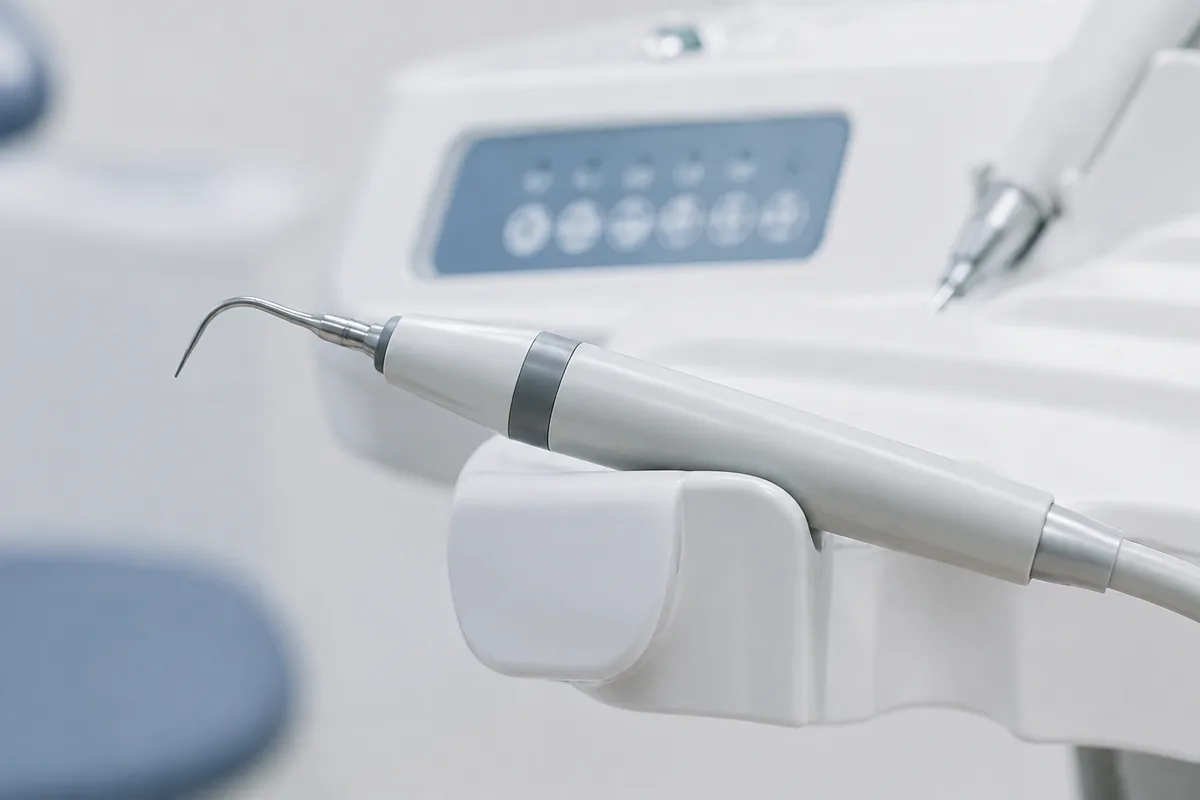
Ultrasonic (Piezo) Scalers
Gentle ultrasonic tips clear hardened tartar with far less scraping than hand instruments. If you've had a cleaning where a metal hook was pulled and pushed across your teeth, ultrasonic (Piezo) scaling offers a different experience — one built around vibration rather than pressure, which most patients find easier to sit through.
What ultrasonic (Piezo) Scalers is
An ultrasonic, or Piezo, scaler is a handheld dental instrument with a thin metal tip that vibrates at a very high frequency — far beyond what the human hand can produce. That vibration breaks up hardened tartar (calculus) and disrupts the bacterial film on tooth surfaces, while a steady stream of water rinses debris away and keeps the tip cool.
This technology improves on traditional hand scaling, which relies on a sharp curette dragged across the tooth to physically scrape off deposits. Hand scaling works, but it requires more pressure, more time on stubborn areas, and can feel like more sensation for the patient. Piezo scalers reduce the amount of hand pressure needed, which generally translates to less scraping, less repetitive strain on the gum tissue, and a more comfortable visit overall.
How we use it at Dental Office of Dr. Salm, Kanner, and Grandeau
At Dental Office of Dr. Salm, Kanner, and Grandeau, ultrasonic scaling is part of routine cleanings, gum evaluations, and periodontal maintenance appointments where tartar has built up along or beneath the gumline. Our dentists use the Piezo tip to break up deposits gently, then often follow with a Prophy-Jet air-and-powder polisher to lift remaining stain without heavy polishing paste.
Because scaling can stir up water and debris, the treatment room is supported by high-powered suction to keep your mouth comfortable throughout, and HEPA air purifiers that keep the air in the room clean during your visit. If you'd like your own music instead of the sound of the instrument, noise-canceling headphones are available in the office as well.
What it means for you
For most patients, the biggest benefit of ultrasonic scaling is comfort. Less physical pressure on the teeth and gums generally means less soreness afterward, especially for anyone with sensitive teeth or inflamed gum tissue. The vibration and water flow also make it easier to reach tartar tucked into tight spaces or below the gumline, which hand instruments can struggle to access.
Because the tip works efficiently, cleanings that involve heavier tartar buildup can often move along more smoothly than they would with hand scaling alone. Clearer removal of tartar and plaque also supports healthier gums over time, which is part of why ultrasonic scaling is commonly paired with periodontal maintenance for patients managing gum disease.
What to expect during your visit
Before scaling begins, your dentist will typically look over your teeth and gums, sometimes reviewing digital X-rays, to see where tartar has built up and whether any areas need extra attention. During the cleaning, you'll feel a light vibration and a steady trickle of water as the tip moves along the tooth surface and gumline; suction nearby keeps things from feeling too wet.
A routine ultrasonic cleaning usually fits within a standard hygiene visit, though appointments involving heavier tartar or periodontal maintenance may take a bit longer. Afterward, teeth often feel noticeably smoother, and any mild sensitivity to temperature typically settles within a short time. Most patients can eat and go about their day right after.
Frequently asked questions
Is ultrasonic scaling safe?
Yes — ultrasonic scalers are a standard part of general and periodontal dental care. The vibration is calibrated to remove tartar without damaging healthy tooth enamel, and water flow keeps the tip cool and the area rinsed as your dentist works.
Does it hurt?
Most patients find ultrasonic scaling more comfortable than traditional hand scaling because it requires less pressure. You may notice mild vibration or, in areas with more buildup or sensitive gums, brief sensitivity, which typically settles quickly once the visit is over.
How long does it take?
A routine cleaning with ultrasonic scaling generally fits within a normal hygiene appointment. If there's significant tartar buildup or you're being treated for gum disease as part of periodontal maintenance, your dentist may need a bit more time to work through each area thoroughly.
Who is it suitable for?
Ultrasonic scaling is appropriate for most patients who need tartar removed during a cleaning, gum evaluation, or periodontal maintenance visit. Your dentist can discuss whether it's the right approach for your particular teeth and gum health.
If you're due for a cleaning or want to ask more about ultrasonic (Piezo) scaling, reach out to Dental Office of Dr. Salm, Kanner, and Grandeau to schedule a visit.