
Sleep Apnea Screening
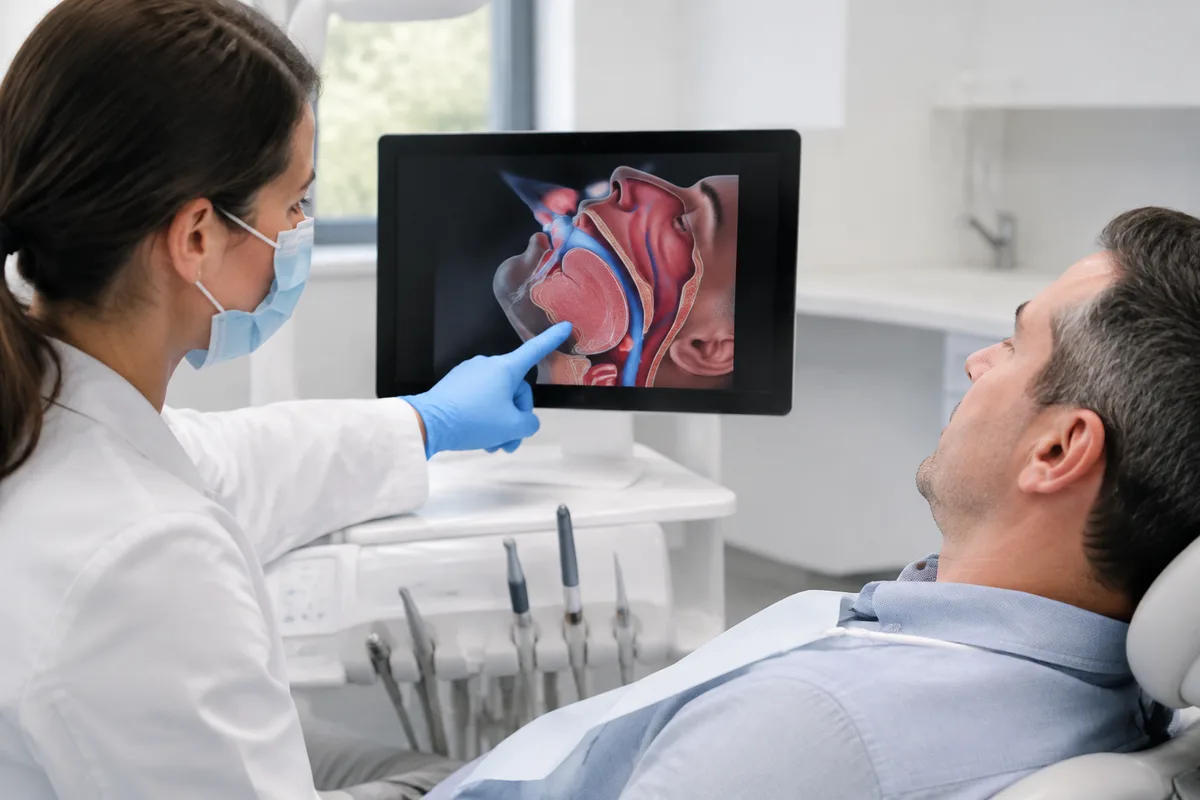
Sleep Apnea Screening
Sleep apnea screening is a simple chairside check that looks for common signs of sleep-related breathing problems during a regular dental visit. At Dental Office of Dr. Salm, Kanner, and Grandeau, this screening flags possible sleep breathing disorders so they can be discussed and, if needed, referred for a fuller evaluation.
What sleep Apnea Screening is
Sleep apnea is a condition in which breathing repeatedly pauses or becomes shallow during sleep, often because the airway narrows or collapses. It's commonly associated with loud snoring, gasping during sleep, and daytime fatigue, though many people are unaware they have it until a dentist or physician notices the warning signs.
A dental screening for sleep apnea generally involves a visual and structural review of the mouth, jaw, and airway — looking at factors like tongue size, tonsil size, the shape of the palate, and jaw positioning — along with a conversation about symptoms such as snoring, morning headaches, or restless sleep. It doesn't replace a formal sleep study, but it offers an accessible first look that can prompt a timely referral when something appears worth investigating further.
How we use it at Dental Office of Dr. Salm, Kanner, and Grandeau
At our office, sleep apnea screening is built into the chairside exam. As the dentist examines your mouth, jaw, and throat, they are also watching for the physical markers that often accompany sleep breathing disorders. This means the screening doesn't require a separate appointment or additional equipment — it happens as part of the care you're already receiving.
Because this is a screening rather than a diagnosis, its role at our practice is to flag possible concerns and start a conversation. If something stands out, we can talk through what you've been noticing at home — snoring, daytime tiredness, or a partner's observations — and discuss appropriate next steps for a more complete evaluation.
What it means for you
The main benefit of a chairside sleep apnea screening is convenience: it happens during an appointment you're already attending, with no extra time in the chair and no separate visit required. For many patients, this is the first time anyone has raised the possibility of a sleep breathing issue, simply because a dental exam offers a good vantage point on the airway and jaw structure.
Screening also supports clearer communication. Rather than guessing whether snoring or fatigue is worth mentioning to a doctor, you have a starting point — an observation from your dental exam that you can bring into a broader health conversation. It's a low-effort way to stay attentive to a condition that's easy to overlook.
What to expect during your visit
There's no special preparation needed. During a routine exam, the dentist will look at your airway, jaw, tongue, and palate as part of the standard oral assessment, and may ask a few questions about your sleep — whether you snore, feel tired during the day, or have been told you stop breathing at night. This adds only a few minutes to the visit and involves no additional instruments beyond what's already used for your exam.
If the screening raises any concerns, the dentist will talk with you about what was observed and what a next step might look like, such as speaking with your physician or a sleep specialist. If nothing notable comes up, the screening simply becomes part of your ongoing dental record, to be revisited at future visits.
Frequently asked questions
Is sleep apnea screening uncomfortable?
No. It's a visual and conversational part of your regular exam, with no extra instruments, sounds, or sensations beyond what you already experience during a checkup.
How long does it add to my appointment?
Only a few minutes. The screening is folded into the exam you're already having, so it doesn't require scheduling extra time.
Does a screening mean I have sleep apnea?
Not necessarily. A screening only identifies signs that are worth a closer look. A formal diagnosis requires a sleep study or evaluation by a physician or sleep specialist.
Who should ask about this screening?
Anyone who snores, feels unusually tired during the day, or has been told by a partner that their breathing pauses during sleep may want to mention it at their next visit, so the dentist can take a closer look as part of the exam.
If you have questions about sleep apnea screening or want to bring it up at your next visit, reach out to Dental Office of Dr. Salm, Kanner, and Grandeau — we're glad to talk it through with you.