
Rotary Endodontics
Rotary Endodontics
Rotary endodontics refers to the motorized instruments used to clean and shape the inside of a tooth during root canal therapy. At Dental Office of Dr. Salm, Kanner, and Grandeau, this equipment is part of how we approach root canal treatment, working alongside other diagnostic tools to make the process more efficient and more comfortable for patients.
What rotary Endodontics is
Root canal therapy involves removing infected or inflamed tissue from inside a tooth's root canal system, then cleaning, shaping, and sealing that space. For decades this was done with hand files, worked back and forth by hand to file away tissue and debris one small increment at a time. It was effective but slow, and the repetitive hand motion made consistent shaping more difficult to achieve.
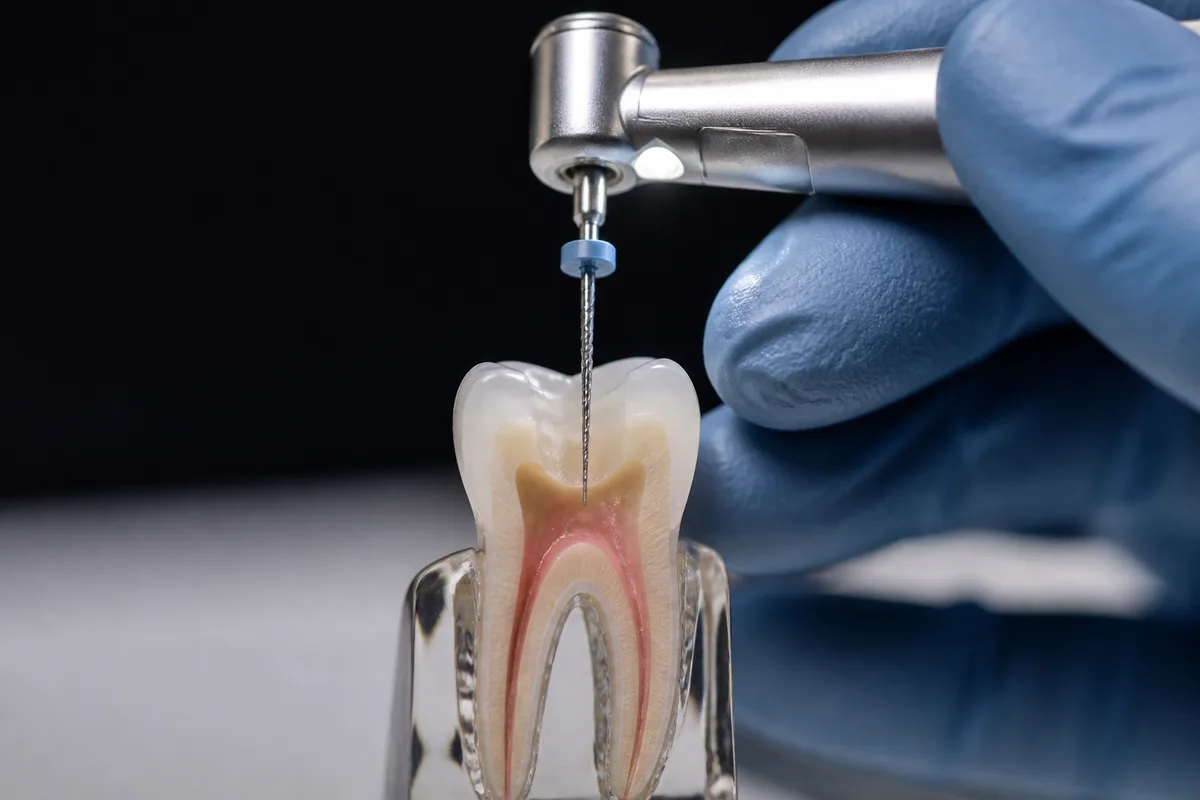
Rotary instruments replace much of that hand filing with a small motor-driven handpiece that turns flexible nickel-titanium files inside the canal. Because the files flex and rotate continuously rather than being pushed and pulled by hand, they can follow the natural curves of a root more smoothly and shape the canal more evenly along its length. This is the main improvement rotary systems brought to root canal treatment: a more consistent, controlled way of preparing the tooth for filling and sealing.
How we use it at Dental Office of Dr. Salm, Kanner, and Grandeau
When root canal therapy is needed, rotary instruments are used to shape the canal system after the tooth has been numbed and access has been made to the root canal space. This is paired with other equipment already in use at the practice: Apex Locators to electronically confirm the exact working length of each canal, and Digital X-Rays to help visualize the root anatomy before and during treatment. Where added precision is helpful, Dental Loupes provide magnification of the treatment area.
For patients who feel anxious about root canal treatment, Nitrous Sedation is available on-site to help take the edge off during the appointment. Root canal therapy itself is listed among the general services offered at the practice, and rotary instrumentation is simply the method used to carry that treatment out.
What it means for you
For patients, rotary instrumentation generally means a smoother, more predictable experience during root canal treatment. Because the files move in a continuous rotating motion rather than being manipulated by hand, canal shaping tends to proceed more efficiently, which can mean less time with your mouth open and fewer separate steps during the procedure.
The flexibility of rotary files also allows them to follow curved root canals more closely than rigid hand files, which supports more thorough cleaning of the canal space. Combined with electronic length measurement and digital imaging, this approach is intended to give a clearer, more precise picture of the tooth's internal anatomy throughout treatment — helping you and your dentist have a clearer understanding of what's being done and why.
What to expect during your visit
A root canal visit typically begins with a review of your symptoms and a digital X-ray to evaluate the tooth. Once the area is numbed, an opening is made into the tooth to reach the root canal system. An apex locator is used to measure each canal precisely, and rotary files are then used to clean and shape the canals.
Most patients feel pressure or vibration rather than pain during this part of the appointment, since the area is numb. If anxiety is a concern, nitrous sedation can be used to help you stay relaxed in the chair. Once shaping is complete, the canals are filled and sealed, and the tooth is typically restored with a filling or crown at a follow-up visit. Appointment length varies depending on the tooth and the number of canals involved.
Frequently asked questions
Is rotary endodontic treatment safe?
Yes. Rotary files are a standard, widely used method for shaping root canals and are used alongside numbing anesthesia so the procedure is performed comfortably. Electronic measurement with an apex locator helps confirm the files stay within the tooth's root, adding a layer of precision to the process.
Will a root canal with rotary instruments hurt?
The tooth and surrounding area are numbed before treatment begins, so most patients feel pressure rather than pain during the procedure. For those who feel nervous about dental visits, nitrous sedation is available to help you feel more at ease throughout the appointment.
How long does a root canal typically take?
Treatment time depends on the tooth being treated and how many canals it has, since molars generally have more canals than front teeth. Rotary instrumentation is designed to shape canals efficiently, which can help keep appointments to a reasonable length.
Who is a candidate for root canal therapy?
Root canal therapy is generally considered when a tooth's inner pulp becomes infected or inflamed, often due to deep decay, a crack, or trauma. Your dentist will evaluate your tooth using a clinical exam and digital X-rays to determine whether root canal therapy is the right course of treatment.
If you have questions about root canal therapy or would like to schedule a visit, reach out to Dental Office of Dr. Salm, Kanner, and Grandeau — we're happy to talk through what treatment would involve for your tooth.