
Intraoral Scanner
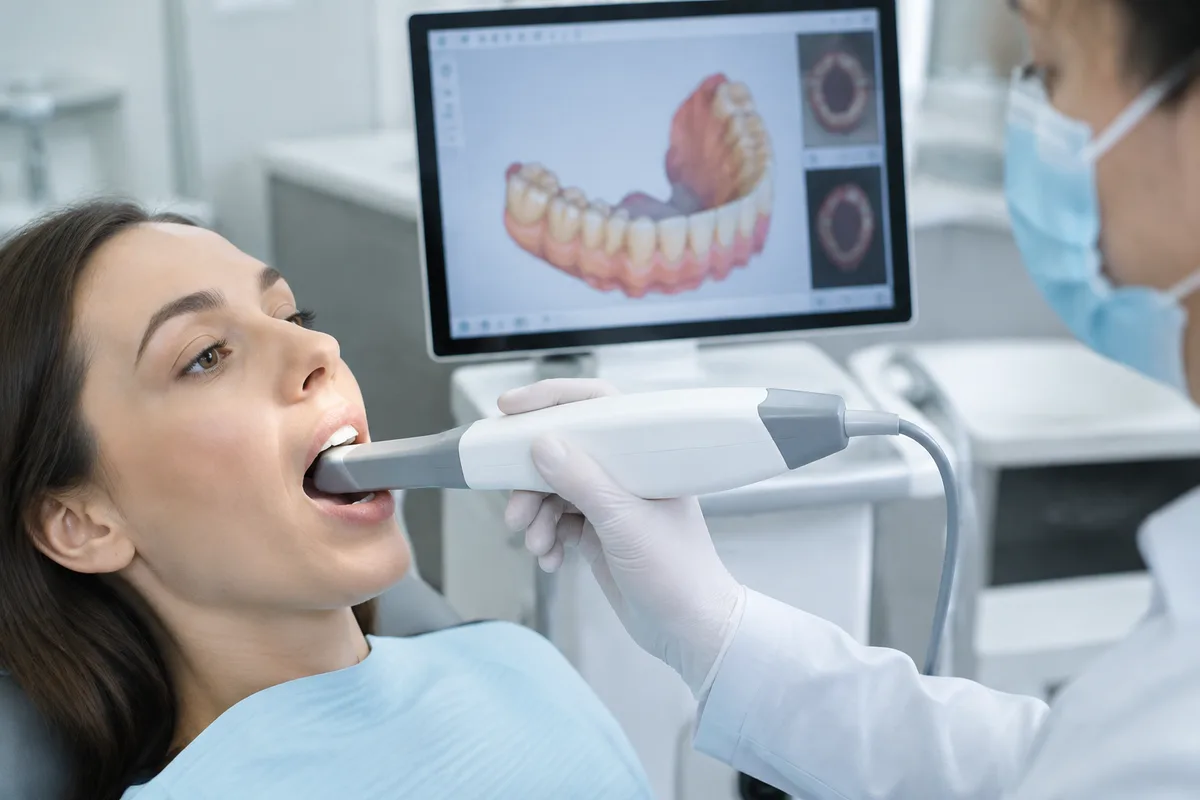
Intraoral Scanner
An intraoral scanner is a handheld digital device that captures a precise 3D image of your teeth and gums in place of a traditional putty impression. At Dental Office of Dr. Salm, Kanner, and Grandeau, this scan supports everything from clear aligners to crowns, giving both patients and dentists a clear, immediate picture of the mouth to plan treatment around.
What intraoral Scanner is
Before digital scanning became common, dentists relied on trays filled with a thick alginate or silicone material that patients had to bite into and hold still for a minute or more while it set. The material could feel bulky, trigger a gag reflex, and occasionally needed to be redone if it shifted or bubbled before setting.
An intraoral scanner replaces that tray with a small wand that is gently guided around the teeth. It projects light onto the tooth surfaces and stitches together thousands of individual images into a detailed digital model, viewable right away on a monitor. That file can then be sent electronically to a dental lab or used chairside to design a restoration, without ever mixing a tray of impression material.
How we use it at Dental Office of Dr. Salm, Kanner, and Grandeau
At this practice, the intraoral scanner is used in place of messy molds whenever a custom appliance is being made — for example, clear aligners, retainers, crowns, veneers, or implant restorations. The digital file gives our dentists an accurate model of your bite and tooth shape to work from, which can be reviewed on screen with you before any lab work is ordered.
The scan also pairs naturally with other tools used in the office. Digital Smile Design can build on a scan to preview how veneers or a broader cosmetic plan might look before treatment begins, and Digital Shade Matching helps make sure a new crown or veneer blends with the surrounding teeth. Because the scan and the shade reading are both digital, that information travels together to the lab making your restoration.
What it means for you
For patients, the biggest difference is usually comfort — there is no tray of material sitting in your mouth, no waiting for it to set, and no gagging sensation that some people associate with traditional impressions. The scan itself is quick and can be paused and restarted at any point if you need a break.
A digital scan is also easy to review together. Because the model appears on a screen right away, your dentist can point out specific areas of the bite or tooth shape as part of explaining a treatment plan, rather than describing it secondhand after a mold has been sent out. And because the file is digital from the start, there is nothing that can warp, shrink, or get lost the way a physical impression sometimes can on its way to a lab.
What to expect during your visit
If a scan is planned for your visit, there is generally no special preparation needed beforehand. Your dentist or a member of the team will explain which teeth need to be captured — sometimes just a section of the mouth for a single crown, sometimes the full upper and lower arches for aligners or a more involved restoration.
During the scan, the wand is moved slowly along the outside, inside, and biting surfaces of the teeth. You may feel light contact or a cool sensation from the scanner tip, but there is no vibration, suction, or bad taste to manage. Most scans take only a few minutes, and you can breathe normally throughout since nothing is filling the mouth.
Afterward, the digital model appears on the monitor, and your dentist can walk through it with you before deciding on next steps — whether that means sending the file to a lab for a crown or aligners, or using it as a baseline record for future visits.
Frequently asked questions
Is intraoral scanning safe?
Yes. The scanner uses light to capture images of the tooth surfaces, with no radiation and no chemicals involved, making it a straightforward and safe alternative to a physical impression.
Is it more comfortable than a traditional impression?
Most patients find it more comfortable, since there is no tray or impression material to bite into and hold in place. The wand simply passes over the teeth, which many people find easier to tolerate, especially those who find trays uncomfortable or gag-inducing.
How long does a scan take?
A scan typically takes just a few minutes, depending on how much of the mouth needs to be captured. A single tooth for a crown is quicker than a full set of aligner scans covering both arches.
Who is intraoral scanning suitable for?
Intraoral scanning is generally suitable for adults and children who need an accurate digital model of their teeth, whether for aligners, a crown, a retainer, or an implant restoration. Your dentist can let you know during your exam whether a scan is the right approach for your particular treatment.
If you would like to learn more about intraoral scanning or see how it might fit into your own treatment plan, reach out to Dental Office of Dr. Salm, Kanner, and Grandeau to ask us about it.