
Fluorescent Cancer Screening
Fluorescent Cancer Screening
Fluorescent Cancer Screening uses a special light to highlight changes in the soft tissue of the mouth that can be hard to see under regular exam lighting. At Dental Office of Dr. Salm, Kanner, and Grandeau, this exam is offered as part of routine oral cancer screenings, helping our dentists take a closer look at areas of the cheeks, tongue, gums, and throat during a standard visit.
What fluorescent Cancer Screening is
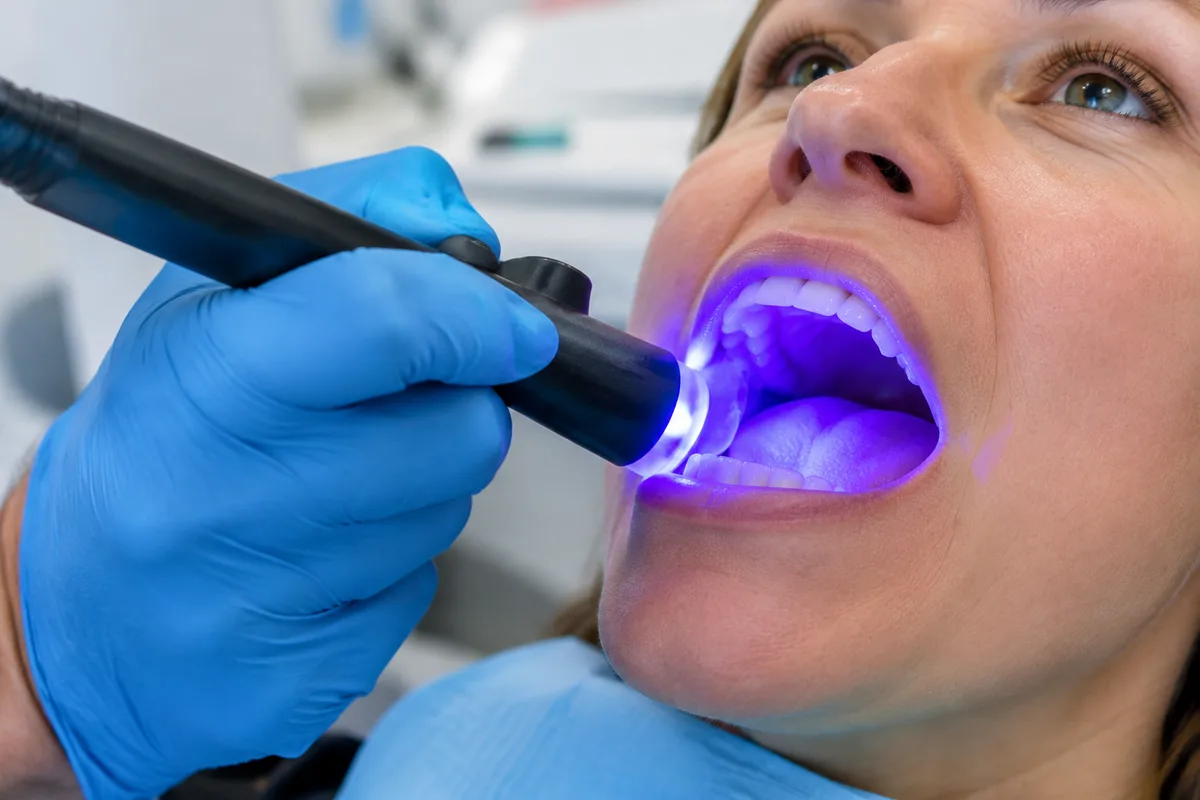
Healthy oral tissue and abnormal tissue can absorb and reflect light differently. A fluorescent screening device shines a specific wavelength of light into the mouth, and healthy tissue typically fluoresces in a consistent, even pattern. Areas of concern — tissue that has changed in a way that isn't yet visible to the naked eye — may appear darker or lose that even glow, which gives the dentist a reason to look more closely or monitor the area over time.
This kind of screening builds on the traditional visual and tactile oral cancer exam, where a dentist looks and feels for lumps, discoloration, or sores that haven't healed. Fluorescent light doesn't replace that exam; it adds another layer of information, catching subtle tissue changes that might not yet be obvious under regular light alone.
How we use it at Dental Office of Dr. Salm, Kanner, and Grandeau
The fluorescent light exam is used alongside the routine oral cancer screening that is already part of comprehensive and periodic exams here. Rather than being a separate appointment, it's typically incorporated into a checkup, giving our dentists an additional tool to examine the soft tissue of the mouth while they're already reviewing your overall oral health.
Because the practice also uses an intraoral camera, any area that draws attention can be shown to you directly on the exam room screen, so you can see exactly what the dentist is looking at and why. Digital X-rays remain part of the same visit for the hard tissue and bone picture, so the fluorescent exam is one piece of a broader, complete look at your mouth rather than a standalone step.
What it means for you
For patients, the main value of a fluorescent light exam is added reassurance. It gives the dentist another way to look at tissue that might otherwise be judged by eye alone, which can be especially useful for tracking subtle changes over successive visits. The exam itself adds only a small amount of time to a routine checkup, so it doesn't turn a normal visit into a long one.
It's also non-invasive and doesn't require any needles, drilling, or anesthesia. The light is simply directed into the mouth for a brief look, so there's nothing to prepare for and nothing to recover from afterward.
What to expect during your visit
The fluorescent screening is usually done during a regular exam, after your dentist has already reviewed your health history and taken a visual look at your mouth. The room lights may be dimmed, and a handheld device is used to direct the light across the inside of the cheeks, tongue, floor of the mouth, and gums. You may be asked to open wide, move your tongue, or turn your head slightly so different areas can be checked.
The process itself only takes a few minutes and doesn't cause any discomfort — there's no pressure, sound, or sensation beyond the light itself. If anything appears worth a closer look, your dentist will explain what they're seeing, often using the intraoral camera to show you the area directly, and will discuss appropriate next steps or follow-up timing.
Frequently asked questions
Is the fluorescent light exam safe?
Yes. The exam uses a low-intensity light and does not involve radiation, needles, or any invasive steps. It's simply a visual aid that helps the dentist see tissue more clearly during an exam you'd already be having.
Will it feel uncomfortable?
No. Most patients feel nothing at all beyond the light itself and the normal movements of opening their mouth or repositioning their tongue, similar to any other part of a routine exam.
How long does it take?
The screening itself typically takes just a few minutes and is done as part of a regular checkup, so it doesn't require a separate appointment or add significant time to your visit.
Who is this screening appropriate for?
It's generally suitable for any patient receiving a routine oral cancer screening as part of their exam, regardless of age. Your dentist can tell you more about how often it makes sense for your particular situation.
If you have questions about fluorescent Cancer Screening or would like it included at your next visit, reach out to Dental Office of Dr. Salm, Kanner, and Grandeau — we're happy to talk through what it involves.