
Electric Handpieces
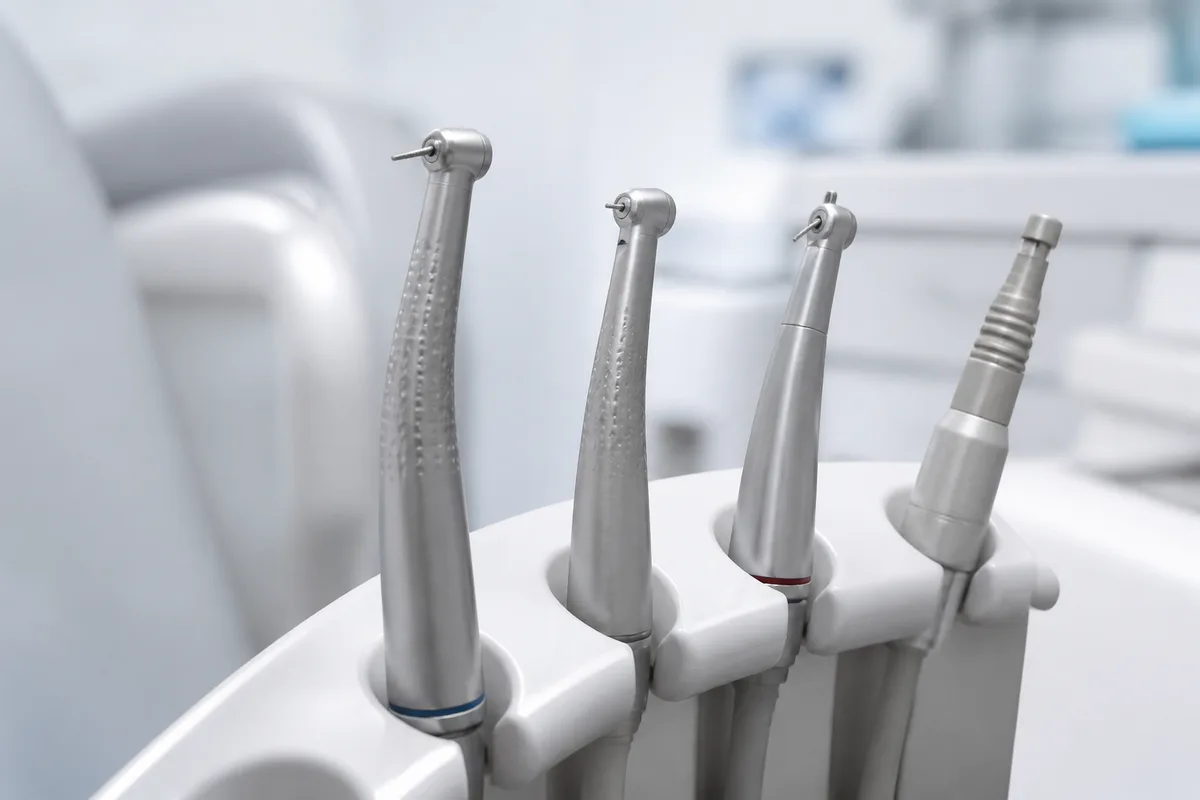
Electric Handpieces
Electric handpieces are the modern alternative to the air-driven drills many patients remember from dental visits years ago. At Dental Office of Dr. Salm, Kanner, and Grandeau, these instruments are part of the everyday equipment used for fillings, crown preparation, and other routine restorative work, chosen because they run quieter and smoother than older air turbine drills.
What electric Handpieces is
A dental handpiece is the instrument that holds the rotating bur used to shape teeth during a filling, crown preparation, or similar procedure. Traditional handpieces are powered by compressed air, which tends to produce a high-pitched whine and can vary in speed and torque depending on how hard the bur is pressed against the tooth.
Electric handpieces use a small electric motor instead of air pressure. This gives the instrument a steadier, more consistent speed regardless of pressure, and the motor itself runs with less of the high-frequency sound that many patients associate with dental visits. The result is a tool that cuts tooth structure with less vibration and less noise, while still giving the dentist the control needed for precise work.
How we use it at Dental Office of Dr. Salm, Kanner, and Grandeau
Electric handpieces are used here for the kinds of procedures that call for removing or shaping tooth structure, such as preparing a tooth for a filling or a crown. Because the handpiece runs quieter and smoother, treatment that once felt loud and long can move along with less of the sensation and sound patients tend to dislike.
This equipment is often used alongside other tools already in place in the treatment room. An intraoral camera lets you see the tooth being treated, dental loupes give the dentist a magnified view while working, and high-powered suction keeps the area dry and comfortable throughout. For patients who feel anxious about drilling sounds in general, noise-canceling headphones are also available, and nitrous sedation can be discussed for those who want extra help staying relaxed.
What it means for you
The main appeal of an electric handpiece is comfort. A steadier cutting speed and reduced noise can make routine procedures feel less unsettling, which matters for patients who have avoided dental visits because of the sound or sensation of a traditional drill.
Consistent speed also supports more controlled, predictable cutting, since the dentist does not need to compensate for the power fluctuations that can occur with air-driven tools. For many patients, this translates into a procedure that feels more efficient and less abrupt from start to finish.
- Quieter operation — less of the high-pitched sound associated with older drills.
- Smoother cutting — steady motor speed regardless of pressure applied.
- Reduced vibration — can make the sensation of treatment feel gentler.
What to expect during your visit
If your treatment plan calls for a filling, crown, or similar procedure, the area will typically be numbed first. Once you're comfortable, the dentist uses the electric handpiece to remove decay or shape the tooth as needed, working alongside suction to keep the area clear and, when helpful, magnification to see fine detail.
Most patients notice the equipment is quieter than they expect, and many describe the sensation as less jarring than they remember from past visits. Depending on the procedure, this part of treatment can take anywhere from a few minutes to a longer stretch of time; your dentist will let you know what to expect for your specific procedure. Afterward, care instructions depend on the treatment performed, and any numbness will wear off within a few hours.
Frequently asked questions
Is an electric handpiece safe?
Yes. Electric handpieces are standard dental equipment used widely in general dentistry for procedures like fillings and crown preparation. They are simply a different power source for the same basic function as a traditional drill.
Will it hurt less than a regular drill?
Many patients find the reduced noise and steadier motion more comfortable, though numbness is still used for procedures that require it. Comfort can vary from person to person, so let your dentist know if you have concerns beforehand.
How long does a procedure with an electric handpiece take?
This depends entirely on the procedure being performed rather than the handpiece itself. A simple filling may take less time than preparing a tooth for a crown, and your dentist can give you a time estimate specific to your visit.
Who is this suitable for?
Electric handpieces are used for the same range of patients and procedures as traditional drills, including routine fillings and restorative work. If you have specific concerns, such as sensitivity to sound or vibration, mention them so your visit can be planned accordingly.
If you'd like to know more about how electric handpieces are used during your treatment, reach out to Dental Office of Dr. Salm, Kanner, and Grandeau to ask questions or schedule a visit.