
Digital X-Rays
Digital X-Rays
Digital X-rays are a routine part of modern dental care, giving the dental team a clear look at what's happening beneath the gum line and inside each tooth. At Dental Office of Dr. Salm, Kanner, and Grandeau, low-radiation digital X-rays give Dr. Salm a clear, fast diagnostic picture at every checkup, helping guide decisions about cleanings, fillings, and other treatment.
What digital X-Rays is
Digital X-rays use an electronic sensor in place of traditional film to capture images of the teeth, roots, and supporting bone. The sensor sends the image directly to a computer screen within seconds, rather than requiring the image to be developed in a darkroom. This shift from film to digital sensors is what allows for the lower radiation exposure that digital X-rays are known for, since the sensors are more sensitive and require less energy to produce a usable image.
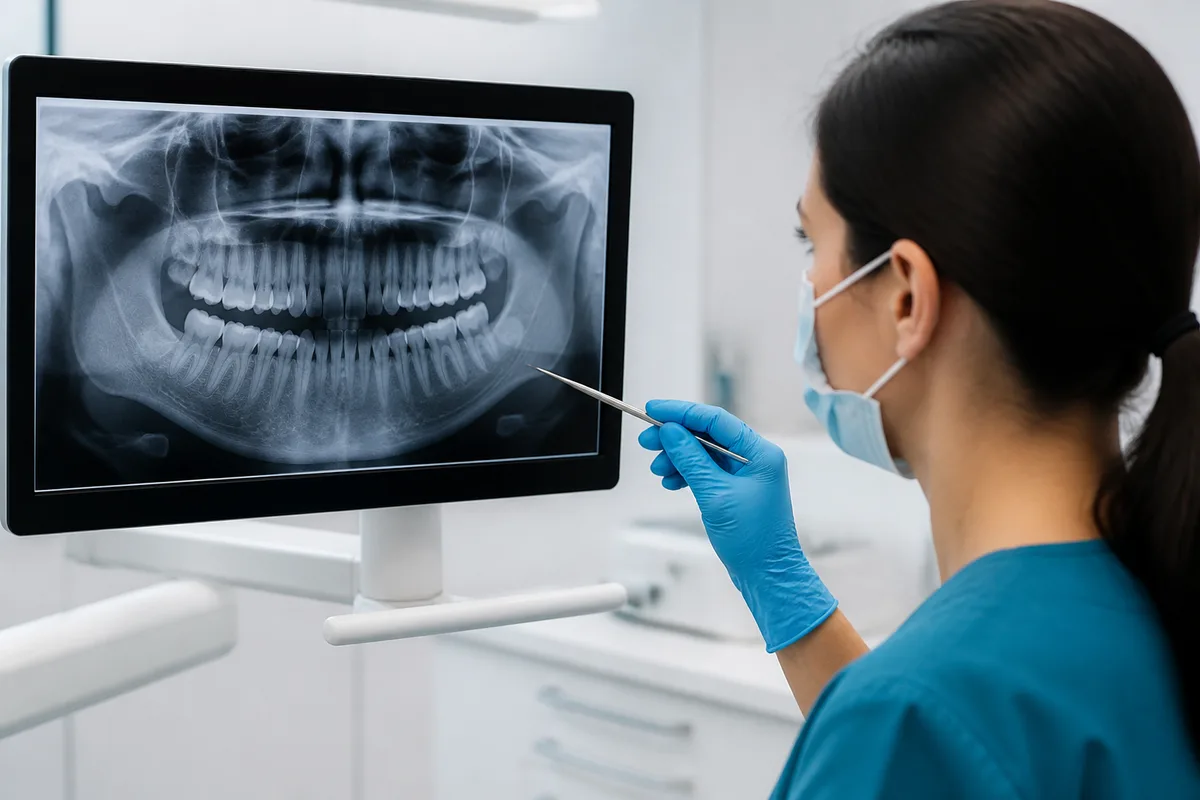
Because the image appears instantly, it can be reviewed, enlarged, and adjusted for brightness or contrast right on the screen. This makes it easier to spot small details like early decay between teeth, changes in bone density, or the position of a tooth root, without having to retake the X-ray as often as older film methods sometimes required.
How we use it at Dental Office of Dr. Salm, Kanner, and Grandeau
At this practice, digital X-rays are used to give Dr. Salm a clear, fast diagnostic picture during checkups, so that any concerns can be identified and discussed with you at the same visit. Because the image is available immediately, there's no waiting for film to develop before treatment planning can begin.
Digital X-rays are often reviewed alongside other diagnostic tools available on site. The intraoral camera can show a close-up view of a tooth surface that complements what the X-ray reveals below it, and the Overjet AI X-ray analysis is used as an additional set of eyes reviewing the same images with Dr. Salm. Together, these tools support a more complete picture before any treatment recommendation is made, whether that's a filling, a crown, root canal therapy, or simply continued monitoring.
What it means for you
For patients, one of the main advantages of digital X-rays is the lower radiation exposure compared to older film-based systems. Because the sensors are more sensitive, less radiation is needed to produce a diagnostic-quality image, which is a meaningful consideration for anyone who has X-rays taken regularly.
Digital X-rays also mean less waiting. Since the image appears on screen right away, there's no delay for film processing, and any necessary discussion about what the image shows can happen during the same appointment. The ability to zoom in and enlarge the image can also make it easier for your dentist to explain what they're seeing, which supports clearer communication about your treatment options.
What to expect during your visit
Before the X-ray is taken, you'll typically be asked to remove any metal jewelry, such as earrings or a necklace, and you may be given a lead apron for extra protection. A small sensor, about the size of a traditional dental film, is placed inside the mouth against the teeth being imaged. You'll be asked to hold still for a moment while the image is captured.
The process itself is quick, usually taking only a few seconds per image, and a full set of X-rays for a checkup is generally completed within a few minutes. Some patients find the sensor's edges slightly firm against the gums or roof of the mouth, but there is no discomfort from the X-ray exposure itself. Once captured, the image appears on the computer screen, where it can be reviewed with you as part of your exam.
Frequently asked questions
Are digital X-rays safe?
Digital X-rays use significantly less radiation than older film-based X-rays, and dental X-rays in general involve a very low dose. Protective measures such as a lead apron may also be used during the process for added safety.
How long does taking digital X-rays take?
Each individual image is captured in just a few seconds, and a full set taken during a checkup typically takes only a few minutes in total. Because the images appear instantly on screen, there's no additional wait for processing.
How often will I need digital X-rays?
How often X-rays are recommended depends on your individual oral health, history, and any specific concerns being monitored. Your dentist will let you know what's appropriate for your situation during your checkup.
Is the sensor uncomfortable to have in my mouth?
The sensor is placed briefly against the teeth and gums and is generally well tolerated. Some patients notice mild pressure from its edges, but the process is brief and does not involve any discomfort from the X-ray itself.
If you have questions about digital X-rays or would like to schedule a checkup with Dental Office of Dr. Salm, Kanner, and Grandeau, we're happy to talk it through with you.