
Dental Loupes
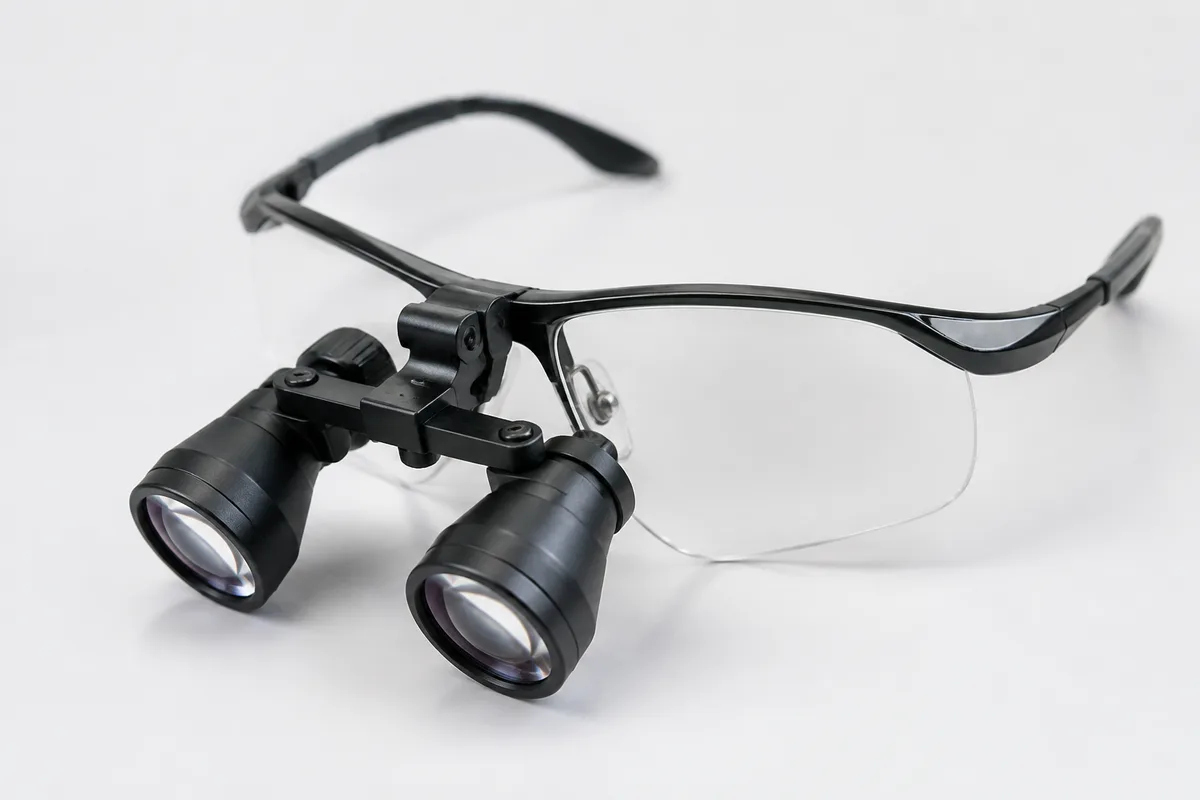
Dental Loupes
Dental loupes are the magnifying eyewear our dentists wear during exams and procedures, allowing them to see teeth, gum tissue, and old restorations in far greater detail than the unaided eye allows. At Dental Office of Dr. Salm, Kanner, and Grandeau, this magnification supports the careful, detail-focused work patients receive at every visit, from a routine cleaning check to more involved restorative treatment.
What dental Loupes is
Loupes are a pair of magnifying lenses, usually mounted on glasses or a headband, that bring a small, well-lit area of the mouth into sharp focus. Dentists have used them for decades as an alternative to relying on the naked eye alone, which can miss fine details like hairline cracks in enamel, the margins of an old filling, or subtle changes in gum tissue.
Compared to working without magnification, loupes let a dentist see a tooth or a treatment site at several times its actual size while maintaining a comfortable working distance and posture. Many loupes also include a built-in light source, so the magnified area is not just larger but also more clearly illuminated than it would be under general room lighting alone.
How we use it at Dental Office of Dr. Salm, Kanner, and Grandeau
Magnification is part of the everyday toolkit our dentists use across many procedures, from evaluating a tooth for a filling to placing a crown or checking the margins of a restoration before it is finalized. As the practice's own summary puts it, magnification lets Dr. Salm work to a level of detail the naked eye cannot reach — the same principle applies whenever any of our dentists reach for loupes during an exam or treatment.
Loupes are typically used alongside other equipment in our office rather than on their own. During a checkup, they complement the clear diagnostic picture provided by our digital X-rays and the close-up view patients see for themselves on the intraoral camera. During restorative or endodontic work, they pair naturally with tools like our electric handpieces and rotary endodontic instruments, giving the dentist a magnified, well-lit view of the exact area being treated.
What it means for you
For patients, magnification generally supports a more careful, precise approach to treatment. Seeing fine detail clearly can help a dentist plan and place a filling or crown margin with more accuracy, and can make it easier to spot small issues, such as an early crack or a spot of decay at the edge of an old restoration, before they become larger problems.
Magnification can also support clearer communication. Because the dentist is looking closely at a specific area, it is often easier to describe exactly what is being seen and why a particular treatment is recommended, especially when that view is paired with the intraoral camera image on the screen in front of you.
None of this changes how a visit feels for most patients — loupes are worn by the dentist and do not touch or affect you directly. They simply support the accuracy of the exam or procedure taking place.
What to expect during your visit
You won't need to do anything differently to prepare for a visit that involves loupes. Before treatment begins, the dentist will position the light and lenses to get a clear view of the area being examined or treated, much as they would put on any other piece of protective or diagnostic equipment.
During the appointment, the dentist works as usual — checking a tooth, preparing it for a filling or crown, or reviewing the results of a cleaning — while looking through the loupes for a magnified view. You may notice the dentist leaning in slightly closer or pausing to check a detail more carefully; this is simply the magnification doing its job. Afterward, there is no recovery time or special aftercare associated with the use of loupes themselves, since they are a diagnostic and working tool for the dentist rather than a treatment applied to you.
Frequently asked questions
Is it safe to have my dentist use loupes during treatment?
Yes. Loupes are simply magnifying lenses worn by the dentist and do not involve any radiation, chemicals, or contact with your mouth beyond the normal instruments used for your treatment. They are a standard piece of dental equipment used to support a clear, detailed view during exams and procedures.
Will I feel anything different when loupes are used?
No. Loupes do not touch you or change the sensation of treatment. You may simply notice the dentist positioning their head and light slightly differently to get a good view of the area being examined or worked on.
How often are loupes used during a visit?
Magnification can be used during many types of appointments, from a routine exam or cleaning check to more detailed restorative or endodontic work. Whether loupes are used, and for how long, depends on the specific procedure and what the dentist needs to see closely.
Is magnification suitable for every patient?
Yes. Because loupes are worn by the dentist rather than applied to the patient, they can be used during exams and treatment for patients of any age or dental history. There is no special preparation or eligibility required on your part.
If you have questions about how magnification is used during your treatment, reach out to Dental Office of Dr. Salm, Kanner, and Grandeau — we're happy to talk through what to expect at your next visit.