
Caries Detection Laser
Caries Detection Laser
Small cavities can hide from the naked eye and even from standard X-rays until they've grown large enough to need a bigger repair. A caries detection laser is designed to catch that early decay sooner, using light rather than guesswork, so it can be addressed while treatment is still simple.
What caries Detection Laser is
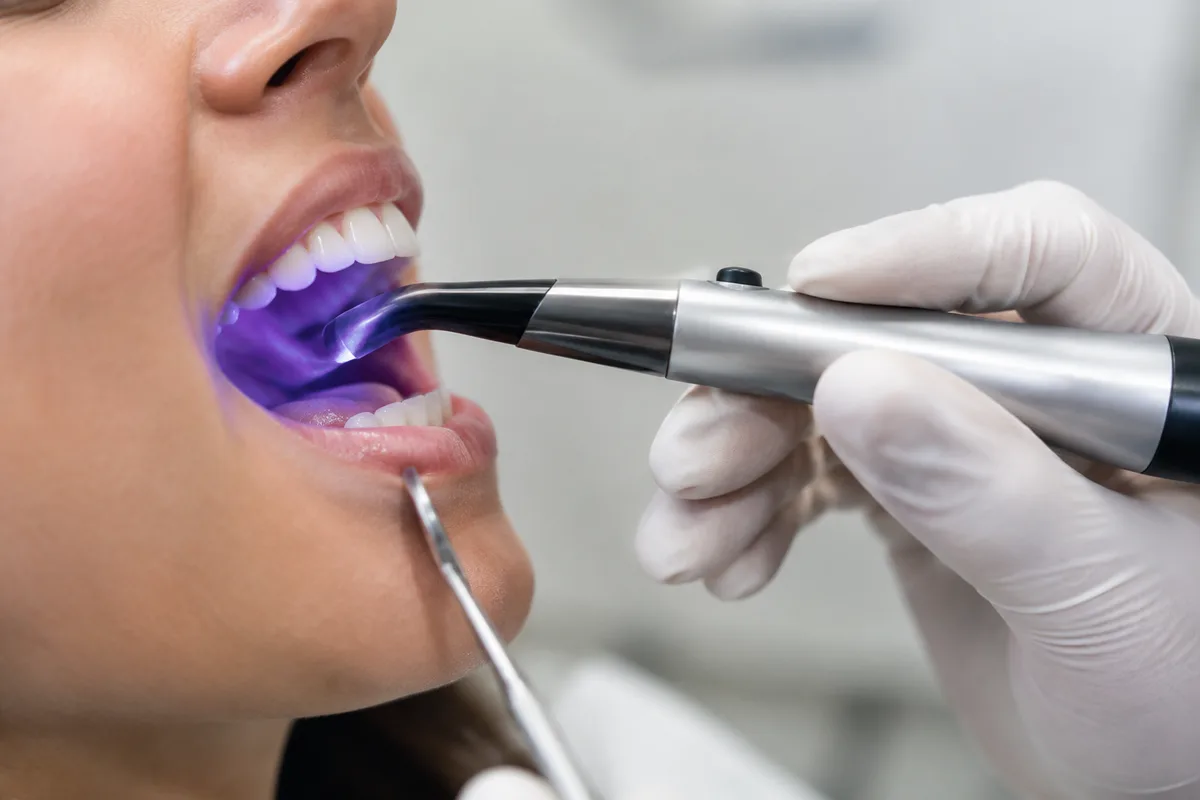
Caries detection lasers use fluorescence to tell healthy tooth structure apart from decayed enamel and dentin. A low-power light is directed onto the tooth surface, and the device reads how the tissue fluoresces in response. Healthy enamel reflects light differently than decayed tissue, and the laser translates that difference into a readable signal or number, flagging areas that may need a closer look.
This approach improves on relying solely on a visual exam and an explorer (the metal pick used to feel for soft spots), which can miss decay hidden in pits, grooves, or between teeth, and which can sometimes physically stress a weakened tooth surface. It also complements X-rays, which are excellent for seeing decay between teeth and below the gumline but are less sensitive to very early changes on the biting surfaces.
How we use it at Dental Office of Dr. Salm, Kanner, and Grandeau
At Dental Office of Dr. Salm, Kanner, and Grandeau, fluorescence detection is used to find decay in its earliest stages, before it has a chance to spread. It's typically brought in during a routine exam, alongside the other diagnostic tools already in use in the practice — digital X-rays for a broader picture, the intraoral camera so you can see what the dentist sees, and Overjet AI analysis reviewing X-ray images as an additional set of eyes.
When an area is flagged, the practice's other minimally invasive options can come into play. Very early lesions may be candidates for Icon resin infiltration or air abrasion, both of which can address decay without a drill, while more established cavities are treated with tooth-colored fillings. Which path makes sense depends on how far the decay has progressed, and that's something your dentist will discuss with you directly.
What it means for you
Finding decay earlier generally means simpler, more conservative treatment. A cavity caught while it's still small may be managed without a drill at all, and even when a filling is needed, catching it early usually means less tooth structure has to be removed.
Because the laser reading is quick and doesn't require probing with a sharp instrument, it also tends to be more comfortable than manual exploration, particularly for anxious patients or on sensitive teeth. And because it produces a visual or numeric reading, it can make it easier for you to understand what your dentist is seeing and why a particular recommendation is being made.
What to expect during your visit
Caries detection is usually folded into a regular exam rather than scheduled as its own appointment. After your teeth are cleaned or polished (a clean, dry surface gives the most reliable reading), the dentist passes the device's tip lightly over the chewing surfaces of your back teeth, pausing on any areas that show a signal. No numbing, drilling, or radiation is involved, and most patients feel nothing more than a light touch.
The screening itself typically adds only a few minutes to your appointment. If a suspicious area is found, your dentist will talk you through what the reading suggests and what, if anything, needs to happen next — whether that's simply monitoring the spot at your next cleaning or moving forward with a conservative treatment the same day or at a follow-up visit.
Frequently asked questions
Is the caries detection laser safe?
Yes. It uses a low-power light rather than radiation, and there is no cutting or drilling involved in the reading itself. It's considered a safe, non-invasive way to gather extra information about your teeth.
Does it hurt?
No. The device is simply passed over the surface of the tooth, so most patients feel little more than a gentle touch, with none of the pressure or scraping sometimes felt with a manual exam.
How often is it used?
It's commonly used at routine exam and cleaning visits as part of the overall check of your teeth, rather than as a stand-alone appointment. Your dentist can let you know if and when it makes sense for your particular checkups.
Who is it suitable for?
It's generally suitable for most patients receiving a routine dental exam, including those who are anxious about traditional probing. Your dentist will let you know if it's a good fit for the areas of your mouth being evaluated.
If you'd like to learn more about caries detection with fluorescence technology, reach out to Dental Office of Dr. Salm, Kanner, and Grandeau to ask questions or schedule a visit.