
Apex Locators
Apex Locators
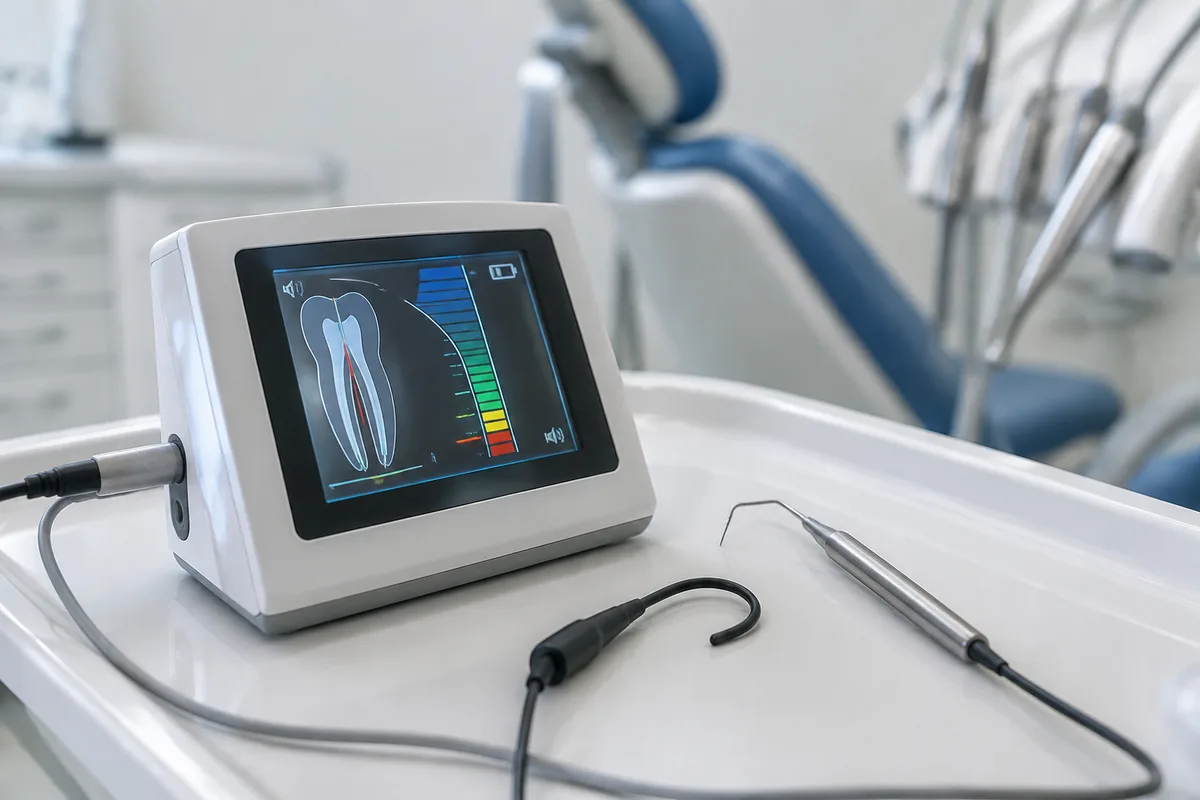
An apex locator is a small electronic device used during root canal therapy to measure the length of a tooth's root canal system with precision. At Dental Office of Dr. Salm, Kanner, and Grandeau, this tool works alongside our other endodontic instruments to help make root canal treatment more accurate and predictable.
What Apex Locators is
An apex locator measures electrical resistance inside a root canal to identify the exact point where the canal ends at the tooth's apex, or tip. A small probe is connected to a file placed inside the canal, and the device gives a reading — often a sound, number, or light — that tells the dentist how close the file is to the root's natural endpoint.
Before apex locators became common, dentists relied mainly on X-rays taken at intervals during treatment to estimate root length. That approach worked, but it meant more X-ray exposure, more waiting between images, and more guesswork about exactly where a file had traveled. Electronic apex location gives a continuous, real-time reading instead, which reduces the reliance on repeated film and helps confirm canal length as treatment progresses.
How we use it at Dental Office of Dr. Salm, Kanner, and Grandeau
When root canal therapy is needed, our team uses the apex locator together with rotary endodontic instruments to clean and shape the canal to the correct length. The electronic reading helps confirm that a file has reached the natural end of the canal without going past it, so the canal can be cleaned thoroughly along its full length.
This measurement works alongside digital X-rays, which are still used to confirm findings and document the tooth, and dental loupes, which give magnified visibility of the tooth's structure during treatment. Used together, these tools support the accuracy that root canal therapy depends on, from the first file placed to the final filling of the canal.
What it means for you
For patients, electronic apex location generally means a more precise sense of where treatment stands at each step, since the dentist isn't relying only on estimation or a series of separate X-rays. It can also mean fewer interim X-rays are needed during the procedure, since the device gives an ongoing reading rather than a single snapshot.
Precise measurement matters because a canal that is under-treated or over-treated can lead to discomfort or the need for further care later. Knowing the exact working length helps the dentist clean and fill the canal appropriately, which supports a smoother healing process and a more comfortable recovery.
What to expect during your visit
If you're having root canal therapy, the tooth is first numbed so you're comfortable throughout the procedure. Once the canal is accessed, a small file connected to the apex locator is inserted, and the device gives a reading that helps the dentist determine how far to go. You won't feel the measurement itself — it happens quietly in the background as your dentist works.
The apex locator is used at the point in treatment when the canal is being cleaned and shaped, which is typically one part of a longer root canal appointment. Most patients don't notice anything different about this step compared to the rest of the procedure; it simply helps guide the instruments your dentist is already using.
Frequently asked questions
Is using an apex locator safe?
Yes. Apex locators use a very small electrical signal to measure canal length and don't involve radiation. They're a standard part of modern root canal therapy and are used in addition to, not instead of, careful clinical judgment.
Will I feel anything from the apex locator?
No. The tooth is numbed before any canal work begins, so the file and the electronic reading it provides shouldn't cause discomfort. Any sensation you notice during a root canal is typically related to pressure, not the measurement device itself.
How long does this part of treatment take?
Measuring canal length with an apex locator takes only a small portion of the overall root canal appointment. The bulk of your visit is spent cleaning, shaping, and filling the canal — the apex locator simply helps confirm length along the way.
Is an apex locator used for every root canal?
It's commonly used whenever root canal therapy is performed, since knowing the exact canal length is a basic part of treating the tooth accurately. Your dentist will determine what's appropriate for your specific tooth and situation.
If you have questions about root canal therapy or want to learn more about how Dental Office of Dr. Salm, Kanner, and Grandeau approaches this treatment, we welcome you to reach out and schedule a visit.