
Air Abrasion
Air Abrasion
Air abrasion is a fine air-driven spray that removes small areas of decay, often without the drill. At Dental Office of Dr. Salm, Kanner, and Grandeau, it offers a quieter, gentler way to treat early cavities and prepare teeth for certain restorations.
What air Abrasion is
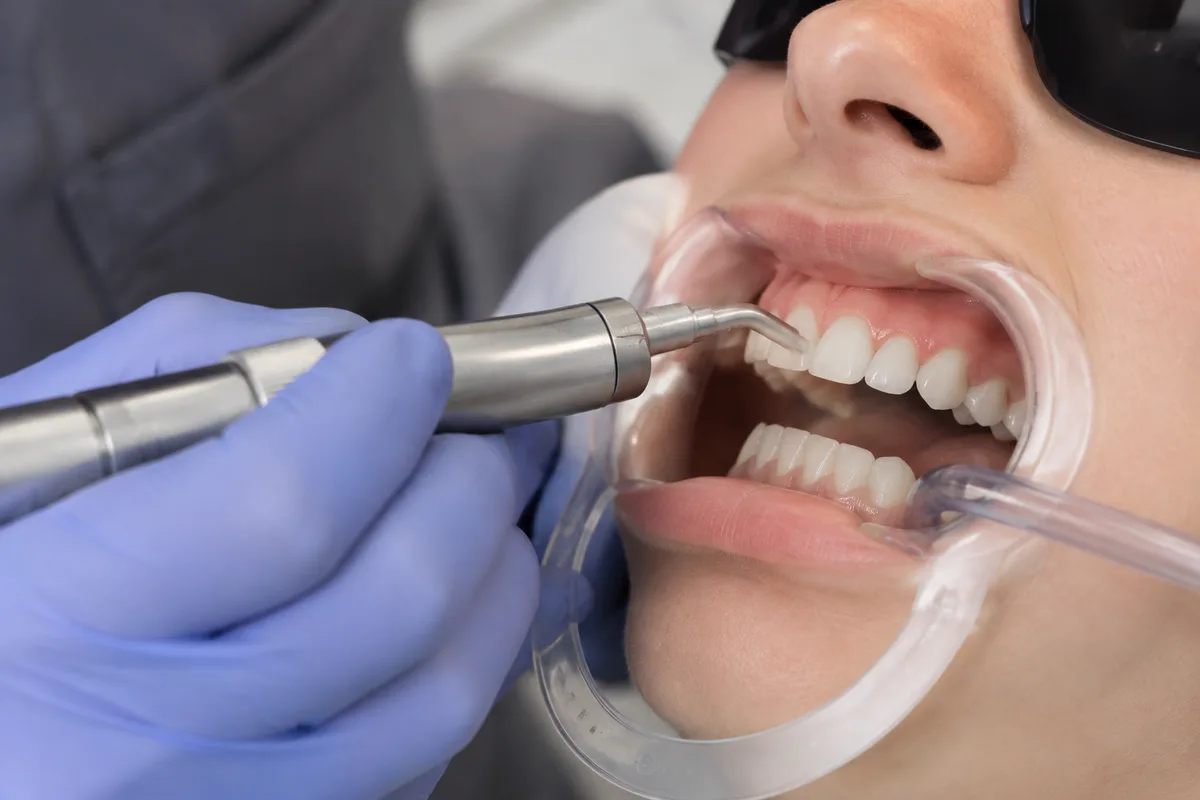
Air abrasion works by directing a fine stream of air mixed with a fine abrasive powder at a targeted spot on the tooth. The stream gently wears away decayed or stained enamel on contact, similar in principle to a very small, precise sandblaster. Because it removes material in tiny increments, a dentist can stop as soon as healthy tooth structure is reached.
For many small, shallow cavities, this approach can reduce or eliminate the need for the traditional dental drill. Traditional drilling uses a rotating bur that generates vibration, heat, and often the sound patients associate with dental visits. Air abrasion, by contrast, produces little vibration and no heat, which is part of why it has become a useful alternative for select cases in modern dentistry.
How we use it at Dental Office of Dr. Salm, Kanner, and Grandeau
At this practice, air abrasion is used to remove small areas of decay in a way that is often more comfortable than a drill for the same job. It fits naturally alongside other diagnostic tools already in use here, such as the caries detection laser and digital X-rays, which help identify decay early enough that a minimally invasive approach like air abrasion is often appropriate.
Air abrasion can also be a good complement to conservative, no-drill treatments already offered at the practice, such as Icon resin infiltration for very early lesions and white spots. When a cavity is small enough, addressing it with air abrasion first may mean less tooth structure is removed overall before a tooth-colored filling is placed.
What it means for you
For many patients, the biggest appeal of air abrasion is comfort. Because there is little to no vibration or heat, it can feel noticeably different from a drill, and in some cases anesthesia isn't needed at all for very small areas of decay. The absence of the drill's sound and sensation is also a relief for patients who feel anxious about traditional treatment.
Air abrasion's precision also means that healthy tooth structure can often be preserved to a greater degree than with drilling, since the dentist can direct the spray to a very specific area. For appropriate cases, this can translate into a simpler, shorter procedure with less need for follow-up numbing or additional appointments.
What to expect during your visit
Before treatment begins, the tooth is examined and the area to be treated is identified, often with the help of digital X-rays or the caries detection laser to confirm the extent of decay. A protective barrier or shield is typically placed around the treatment area to keep the abrasive spray contained, and high-powered suction is used throughout to keep the mouth clear and comfortable.
During the procedure, you'll feel a light tapping or a faint gritty sensation as the air-and-powder stream removes the decayed material. There is no rotating instrument touching the tooth, so the noise and vibration typical of drilling are absent. Once the decay is removed, the tooth is prepared for a filling or other restoration, and the treated area is rinsed clean.
Afterward, most patients are able to return to normal activities right away, since little or no anesthesia is usually required for small areas treated this way. The full process for a single small cavity is generally quick, often completed within the same visit as the exam.
Frequently asked questions
Is air abrasion safe?
Air abrasion is a well-established, minimally invasive technique used in general dentistry. It targets only the treatment area with a controlled air-and-powder spray, and a protective shield is used to keep the surrounding mouth and gum tissue clear of the spray.
Does air abrasion hurt?
Most patients find air abrasion more comfortable than a traditional drill because there is little vibration or heat involved. Some patients need no anesthesia at all for small treatment areas, though this depends on the size and location of the decay.
How long does a treatment take?
Treating a small area of decay with air abrasion is generally quick and can often be completed in the same visit as your exam, without the need for a separate appointment. The exact time depends on the size and number of areas being treated.
Is air abrasion right for every cavity?
Air abrasion works best for small, shallow areas of decay or for preparing a tooth surface for certain cosmetic or restorative work. Larger or deeper cavities may still require traditional drilling, and a dentist can determine which approach fits your specific situation during an exam.
If you'd like to learn whether air abrasion is a good fit for your smile, reach out to Dental Office of Dr. Salm, Kanner, and Grandeau to schedule a visit and ask us about it.