
Bridges
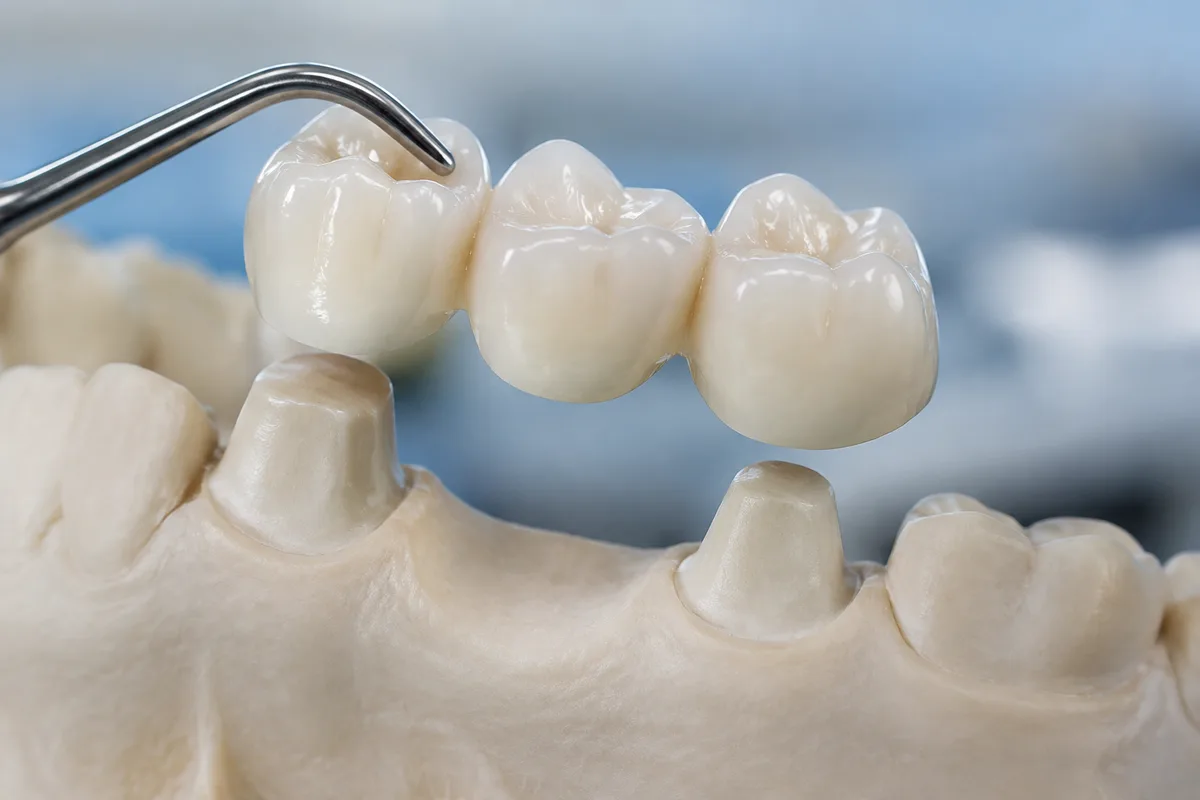
Bridges
A dental bridge replaces one or more missing teeth by anchoring a replacement tooth to the healthy teeth on either side of the gap, or to dental implants. Beyond appearance, a bridge helps you chew and speak comfortably and keeps neighboring teeth from drifting into the empty space over time. Most patients consider a bridge after an extraction, an injury, or the loss of a tooth to advanced decay or gum disease.
What treatment involves
Care usually begins with an exam and X-rays to confirm that the supporting teeth and bone are strong enough to carry a bridge. The anchor teeth are then shaped, an impression or digital scan is taken, and the finished bridge is fitted and cemented into place. Dr. Adam Salm, DMD, and Dr. Hayley Grandeau, DMD, will walk you through the plan and answer your questions before anything begins.
Tools we use
- Intraoral Scanner — digital scans replace messy molds when we design your bridge.
- Digital Shade Matching — a digital reading helps match the new teeth to your natural color.
- Digital X-Rays — low-radiation images show the roots and bone supporting the bridge.
- Intraoral Camera — you can see the same view we do on the screen beside you.
- The Wand (STA) Anesthesia — computer-controlled numbing delivered slowly and comfortably.
- Nitrous Sedation — available if appointments make you anxious.